
Now is the Time for Joy: How Entrepreneurial Mothers Reclaim Agency Amid Care Work
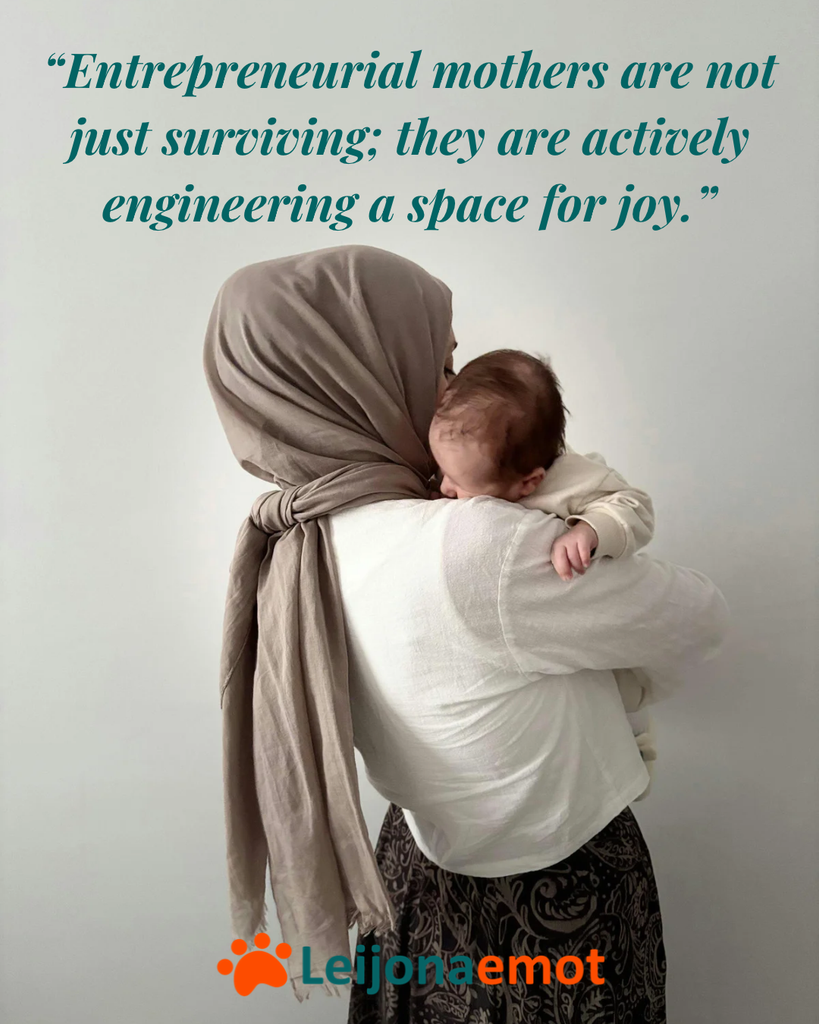
Caregiving for children with additional needs is often framed through narratives of depletion, isolation, and systemic neglect. Standard employment structures, rigid, unforgiving, and unaccommodating, frequently force mothers out of traditional careers as they navigate unpredictable caregiving demands. Yet, a new study published in Community, Work & Family reveals a radically different counter-narrative: mother-caregivers who step into self-employment are not just surviving; they are actively engineering a space for joy.
The research introduces Caregiving Entrepreneurship, a framework demonstrating how the strategic competencies required in intensive caregiving such as logistical agility, crisis management, and fierce advocacy are directly translated into professional business ventures. In turn, running a business creates a ”structural clearing” that grants mothers temporal agency and psychological safety, protecting their domestic lives from burnout.
Using Photovoice and Interpretative Phenomenological Analysis (IPA), seven entrepreneurial mothers captured how joy is manufactured, co-constructed, and recognized. Their visual narratives reveal that joy is not a spontaneous accident or a luxury; it is a politicized, radical resource of defiance against societal norms.
Key insights from the research include
- Planned Unity: Joy is deliberately engineered through complex logistical pre-planning, turning family moments into hard-earned, structured victories.
- Resilient Advocacy: Mothers model autonomy by transforming their care experiences into entrepreneurial ventures that challenge neoliberal expectations of productivity.
- The Extraordinary Ordinary: Everyday milestones—a simple cup of coffee made by a child or a shared meal—are reclaimed as profound awards of emotional repair and long-term care labor.
- The Paradox of Longing: Joy coexists with the ache of sacrificed former selves and missed paths, operating as a hard-earned form of relational hope.
Ultimately, self-employment acts as emotional scaffolding for mother-caregivers, providing the structural autonomy required to transform the ”extraordinary ordinary” into everyday reality.
Read the full open-access research article in Community, Work & Family:
Now is the time for joy: entrepreneurial mothering, care work, and feminist resistance
Regina Casteleijn-Osorno
https://www.tandfonline.com/doi/pdf/10.1080/13668803.2026.2711850
About the author
Dr. Regina Casteleijn-Osorno works at the crossroads of entrepreneurship, disability studies, and visual qualitative methods at Turku University. She is a neurodivergent postdoctoral researcher and mother of 3, each with their own additional care needs. Her work centers on how mother-entrepreneur-caregivers organize their business and home life around neurodivergent childcare needs rather than markets. Dedicated to making research accessible beyond academia, her work blends phenomenology, art-based methods like Lego Serious Play and Photovoice with community impact. She is published in entrepreneurship, business and disability journals and balances her academic rigor with fierce advocacy, baking, and an unwavering devotion to Nick Cave’s music which provides the ideal soundtrack for embracing life.